
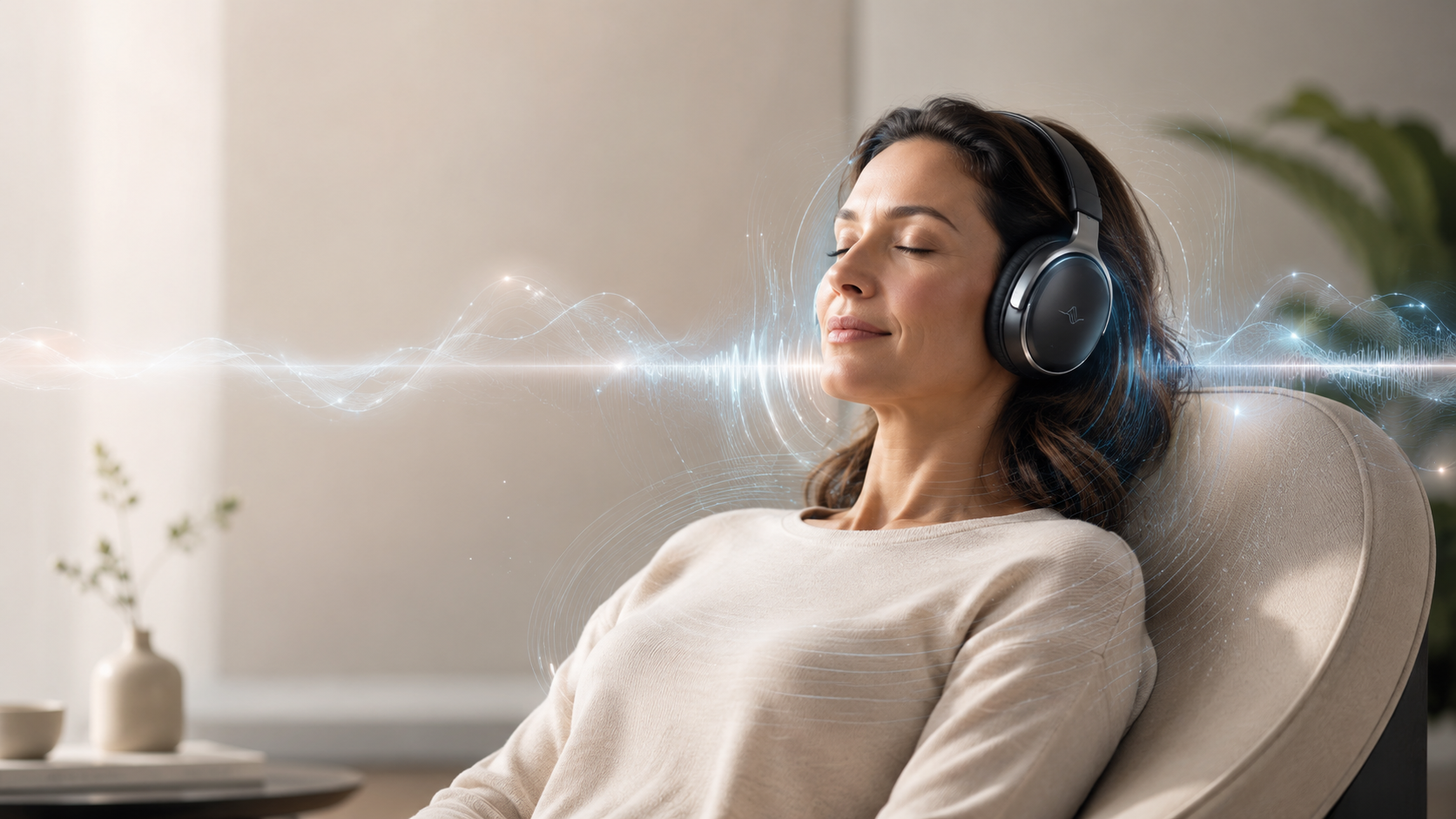
Frequency headphones demo reactions often happen fast. Learn why sound, vibration, and state-shifting technology can create a noticeable first experience.
There is a specific moment that happens in a good frequency headphones demo.
Someone puts the headphones on.
The room gets a little quieter.
They press play.
For a few seconds, nothing dramatic happens.
Then their face changes.
Their shoulders drop. Their eyes soften. Their breath slows. Sometimes they laugh because they were not expecting to feel anything that quickly. Sometimes they go quiet because the shift is easier to feel than explain.
That first minute is powerful because it cuts through the usual wellness-product problem: people do not want another promise. They want an experience.
They want to know, “Will I actually feel this?”
With frequency headphones, the first response often comes before the person has the right words for it. They may describe it as calm, pressure release, a clearer head, a subtle body shift, or simply, “That’s interesting.”
That does not mean frequency headphones are an instant cure. They are not. They are not a medical device, and they are not meant to diagnose, treat, or fix health conditions.
But they can create a noticeable first experience. And that is why the first minute matters.
Why frequency is easier to feel than explain
Frequency wellness can sound abstract until someone tries it.
You can explain sound.
You can explain vibration.
You can explain the idea of helping the body shift into a different state.
But the body does not need a full lecture before it notices a change.
That is part of what makes a frequency headphones demo so effective. The experience is not only intellectual. It is sensory. A person hears the sound, feels the vibration, and notices whether their body responds.
For some people, the first shift is physical. Their jaw unclenches. Their breathing changes. Their shoulders release. They feel less “braced.”
For others, the first shift is mental. Their thoughts feel less scattered. The room feels less loud. They feel more present.
And for some, the reaction is surprise.
They expected a normal pair of headphones. Instead, they get a layered sound and vibration experience that feels different from simply playing music through standard audio.
This is why the phrase “frequency headphones demo” is important. A demo does something a product page cannot do on its own. It lets the person move from curiosity to direct contact.
They are no longer asking, “What is this supposed to do?”
They are asking, “Why did I feel that?”
What people commonly notice in the first minute
Not every first-minute reaction looks the same. That is important.
A careful wellness brand should never promise that every person will feel the same thing at the same speed. People bring different nervous systems, different stress levels, different sleep patterns, different expectations, and different sensitivity to sound and vibration.
But there are common patterns people often report during a sound therapy demo or first-use experience.
Some notice calm.
This can feel like the body finally gets permission to stop gripping. The person may not feel “sleepy,” but they feel less activated. Their system feels a little more settled.
Some notice focus.
The shift is not always relaxation. Sometimes people describe a cleaner mental state, like the static has turned down. They feel more able to sit with one thought at a time.
Some notice emotional release.
This can be subtle. A deeper exhale. A sudden quietness. A feeling that something softened without needing to be forced.
Some notice pressure shifting.
People sometimes describe sensation around the head, face, jaw, neck, or shoulders. This should be framed carefully. It is a user-reported sensory experience, not a medical claim.
Some simply notice surprise.
They may not have a polished explanation. They just know the experience felt different from what they expected.
That is the real story behind many first minute frequency headphones reactions. The product does not need to be over-explained. It needs to be experienced honestly.
Why the first minute can feel different
The first minute works because frequency headphones create a sensory stack.
High Frequency Highway headphones are not only delivering sound. They combine several inputs into one experience: audio, vibration, bone conduction, and app-selected frequencies.
That combination matters.
Sound gives the brain something to follow.
The right sound environment can help interrupt the noise of the day. It gives attention a place to land. Instead of jumping between tabs, tasks, messages, and mental loops, the mind has one clear input.
Vibration gives the body something to notice.
This is where the experience becomes more physical. Vibration can make the session feel less like passive listening and more like a body-based reset. The person is not only hearing the session. They are sensing it.
Bone conduction adds another layer.
Bone conduction helps transmit sound through physical contact points, creating a more embodied listening experience than standard headphones alone. For many people, that is part of what makes the demo feel distinct.
The app helps guide the state.
Instead of guessing what to play, users can choose sessions based on the state they want to support. For a first session, alpha frequencies are a strong starting point for calm and grounded focus. Guided sessions in the app can also help new users ease into the experience without overthinking it.
Delta frequencies should be used when preparing for rest, not when trying to work, drive, study, or stay alert.
The result is not magic. It is a layered sensory experience designed to help the body shift state.
That is why “do frequency headphones work fast” is the wrong question by itself.
A better question is: can a person notice a state shift quickly when sound, vibration, attention, and intention are combined?
For many users, the first minute gives them enough of an answer to keep exploring.
Why skeptics may react quickly too
Skeptics are often the best people to watch during a frequency headphones demo.
They do not come in trying to be impressed. They are not looking for a mystical experience. They may even expect nothing to happen.
That makes their reaction more interesting.
When a skeptical person pauses, exhales, or says, “Wait, I can feel that,” the moment carries weight because it was not forced.
This is the bridge between curiosity and trust.
A person may not understand frequency wellness yet. They may not know which frequency supports which state. They may not know how sound, vibration, and bone conduction work together.
But they can still notice their own response.
That is the body-first nature of the product. Sometimes the experience arrives before the vocabulary.
The goal is not to pressure someone into a belief. The goal is to give them a clean first experience and let them pay attention to what changes.
A simple first-use protocol for new buyers
The best first session is not complicated.
Do not try to test every frequency in one sitting. Do not start while multitasking. Do not judge the product in the first ten seconds.
Give yourself one intentional minute.
Here is a simple protocol for your first session.
1. Choose the state you want first
Before you press play, name what you are looking for.
Calm.
Focus.
Reset.
Rest.
Grounding.
The clearer the intention, the easier it is to notice whether your state changes.
2. Start with alpha or a guided session
For most first-time users, alpha is a smart starting point when the goal is calm, relaxed focus, or a smoother transition out of stress.
If you do not want to choose manually, start with a guided session in the app. Let the session lead you.
Save delta for rest. Delta frequencies are better suited for winding down, preparing for sleep, or entering a slower state. They are not ideal when you need alertness or active focus.
3. Sit still for the first minute
This is the part most people skip.
Do not scroll.
Do not answer messages.
Do not open another tab.
Do not try to prove anything.
Just sit and notice.
Pay attention to your breath, jaw, shoulders, forehead, chest, and the speed of your thoughts.
The first minute is not about forcing a reaction. It is about creating enough quiet to detect one.
4. Notice the small signals
Not every shift is dramatic.
Sometimes the first sign is a deeper breath.
Sometimes it is less tension in the face.
Sometimes it is a softer mood.
Sometimes it is a clearer thought.
Sometimes it is simply curiosity.
Small signals count because state changes often begin quietly.
5. Give the experience a few sessions
A first-minute reaction can be powerful, but frequency wellness is still a practice.
Some people feel a shift quickly. Others need repetition before they can clearly read their own response. That does not mean one person is doing it right and the other is doing it wrong.
Use the headphones at consistent times: before focused work, after a demanding day, during a reset break, or as part of a wind-down routine.
Let the product become a tool, not a trick.
The real proof is the pause
The most convincing demo reaction is not always a big testimonial.
Sometimes it is the pause.
The moment someone stops talking because they are listening inward.
The moment their expression changes.
The moment they say, “I didn’t expect that.”
The moment they ask to try another session.
That is the power of the first minute.
Frequency relief does not always need to announce itself loudly. Sometimes it shows up as a small shift in the body before the mind knows how to explain it.
High Frequency Highway frequency headphones are built for that kind of experience: sound you can hear, vibration you can feel, and sessions designed to help you move toward a more intentional state.
Try them once with your full attention.
Give yourself one clean first-minute reset.
Then decide based on what your body notices.
Wellness clarity note: High Frequency Highway headphones are wellness tools, not medical devices. They are not intended to diagnose, treat, cure, or prevent any disease or medical condition. Individual experiences may vary.
Share:
What 300 Live Reactions Reveal About the First Time People Try High Frequency Highway Headphones
Why 100,000+ People Downloaded a Frequency App Before Soundwear Went Mainstream