
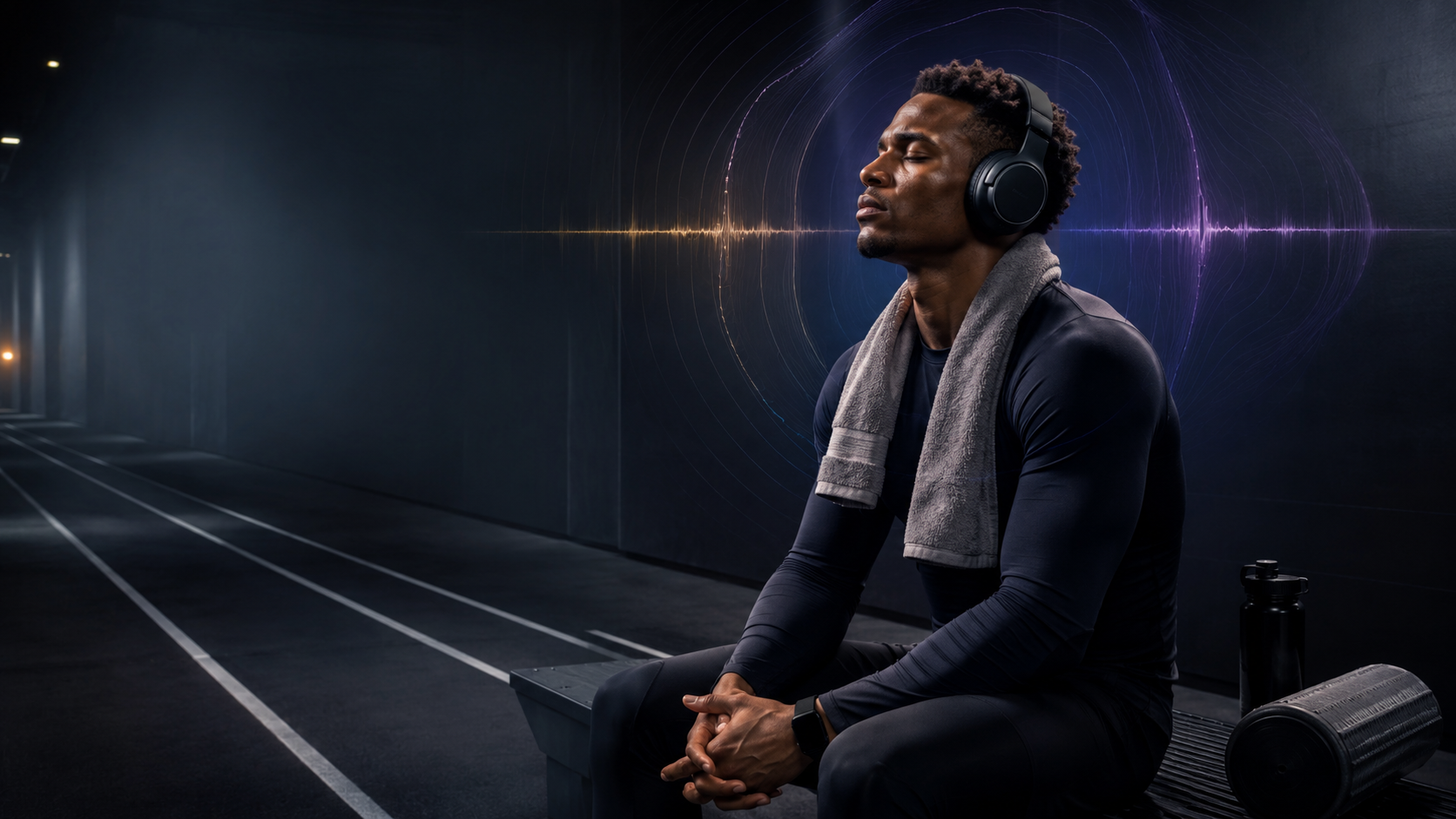
Performance does not begin at the first rep.
It begins before the lift. Before the sprint. Before the shot. Before the fight. Before the moment where the body is expected to respond under pressure.
Every athlete knows the feeling.
Some days the body is ready, but the mind is scattered.
Some days the training plan is right, but the nervous system is overloaded.
Some days the skill is there, but the state is wrong.
That is where the next conversation in performance is moving.
Athletes already train strength, speed, mobility, nutrition, hydration, and recovery. They track sleep. They use compression boots. They sit in ice baths. They work with coaches, trainers, therapists, and data.
But the nervous system is still one of the most overlooked parts of the performance equation.
High Frequency Highway is built around that missing layer: state control.
Not motivation. Not hype. Not another wellness trend dressed up as performance science.
State control means learning how to shift your body and brain into the state the moment requires.
Focused before training.
Calm after training.
Locked in before competition.
Decompressed after pressure.
Restored before sleep.
That is why athletes are starting to pay attention to frequency technology.
Performance Is a State Problem First
Most people think performance is mainly physical.
Athletes know better.
The same body can perform completely differently depending on the state it is in.
A calm athlete reads the field differently.
A focused athlete reacts faster.
A confident athlete moves cleaner.
A recovered athlete trains harder without breaking down.
A well-rested athlete makes better decisions under pressure.
That is not soft. That is performance.
Focus, composure, confidence, recovery, and sleep all depend on state.
And state is heavily influenced by the nervous system.
When the nervous system is overloaded, the athlete does not just feel stressed. The entire performance system changes.
Breathing gets shallow.
Decision-making gets rushed.
Recovery slows down.
Sleep quality drops.
Muscles stay tense.
Attention fragments.
That is why state control for sports performance matters.
The goal is not to become relaxed all the time. Athletes do not need to be calm when it is time to attack a workout, compete, or push the edge.
The goal is to access the right intensity at the right time, then come down when the work is done.
That is the skill.
Why Athletes Are Looking Beyond Traditional Recovery
Sports recovery technology has become serious business.
Athletes use cold plunges, massage guns, red light therapy, breathwork, compression tools, mobility routines, and sleep trackers because recovery is no longer treated as optional.
But most recovery tools focus on the body from the outside in.
Frequency technology approaches recovery from the inside out.
The idea is simple: sound can act as a cue for the brain and nervous system.
Different frequency ranges are commonly used to support different states.
Beta and gamma are associated with alertness, focus, and cognitive intensity.
Alpha is associated with a calmer, more relaxed but awake state.
Theta is often used for visualization, creativity, meditation, and decompression.
Delta is associated with deep sleep and physical restoration.
This is where frequency technology for athletes becomes practical.
An athlete does not need more noise. They need better state direction.
Before training, they may need energy and focus.
After training, they may need a clean downshift.
Before competition, they may need mental rehearsal without panic.
At night, they may need deeper sleep recovery.
The value is not in listening to sound for the sake of sound.
The value is using frequency with intention.
The Athlete-Founder Bridge
High Frequency Highway was not built from theory alone.
Jay’s background as a track athlete matters because track teaches a hard truth: performance is not only about talent. It is about preparation, repetition, timing, and the ability to show up in the right state when the moment arrives.
In track, you cannot hide from your state.
The clock tells the truth.
If your body is tight, it shows.
If your mind is scattered, it shows.
If your recovery is poor, it shows.
If your confidence is off, it shows.
That athletic background gives High Frequency Highway a different lens. This is not about turning frequency into a vague wellness idea. It is about making it useful for people who care about output, discipline, and recovery.
The Kyrie Irving interaction adds another layer of proof.
Kyrie represents a type of athlete who understands that elite performance is not only physical. His game has always carried a different level of rhythm, creativity, feel, and body control.
So when frequency enters the orbit of an athlete like that, the signal is not “celebrity attention.”
The signal is that performance culture is expanding.
Athletes are starting to ask better questions.
How do I get into focus faster?
How do I recover from pressure, not just training?
How do I control my emotional state before competition?
How do I improve the quality of my sleep?
How do I train my nervous system the same way I train my body?
Those are the questions frequency technology belongs inside.
How Athletes Can Use Frequency Technology
Frequency technology should not replace training, coaching, sleep, nutrition, or medical care.
It should support the performance system around them.
Think of it as recovery gear for the nervous system.
The same way an athlete may use a foam roller before mobility work, frequency can become a cue before a mental or physical state shift.
The key is matching the frequency range to the moment.
1. Before Training: Focus and Activation
Before training, the athlete’s job is not just to “get motivated.”
The job is to arrive.
Mentally. Physically. Neurologically.
This is where beta or gamma frequency experiences may fit.
The goal is sharper attention, faster engagement, and cleaner intent before work begins.
Use it before:
Heavy lifting
Skill training
Speed work
Combat training
Game preparation
High-focus drills
This is the state where the athlete wants to feel switched on, not scattered.
The best pre-training state is not chaos. It is controlled intensity.
2. After Training: Cooldown and Downshift
A lot of athletes finish training and stay wired for hours.
The workout ends, but the nervous system does not get the message.
That matters because recovery begins when the body can shift out of stress mode.
Alpha frequency experiences may fit after training as part of a cooldown routine.
Use it after:
Hard training sessions
Late-night workouts
High-stress practices
Long runs
Competition days
The goal is not to erase effort. The goal is to help the system transition.
Train hard. Then downshift on purpose.
3. Before Competition: Visualization and Composure
Athletes already use visualization because the brain rehearses patterns before the body performs them.
But visualization only works when the athlete can stay present long enough to use it.
Theta frequency experiences may fit before competition, especially for mental rehearsal, decompression, and emotional regulation.
Use it for:
Pregame visualization
Breathwork
Mental rehearsal
Post-pressure decompression
Confidence routines
The goal is to rehearse without spiraling.
See the moment. Feel the movement. Return to control.
4. Before Sleep: Recovery and Restoration
Sleep is where the body rebuilds.
But athletes often struggle with sleep because the nervous system stays activated long after the work is done.
Delta frequency experiences may fit into a nighttime recovery routine.
Use it before:
Deep sleep
Travel recovery
Tournament weekends
Heavy training blocks
High-stress weeks
The goal is simple: give the body a clearer signal that the day is over.
You do not recover just because you stopped moving.
You recover when the system can fully come down.
Athlete Frequency Protocol
Here is a simple way to use frequency technology for athletes without making it complicated.
Pre-Training Focus
Use beta or gamma before training.
Time: 10 to 20 minutes
Best for: focus, activation, intent
Use before: lifting, sprinting, skill sessions, competition prep
Goal: enter training sharp, not distracted
Post-Training Recovery
Use alpha after training.
Time: 10 to 15 minutes
Best for: cooldown, nervous system recovery, downshifting
Use after: hard workouts, late sessions, intense practice
Goal: help the body move from stress into recovery
Visualization and Decompression
Use theta for mental rehearsal or decompression.
Time: 10 to 20 minutes
Best for: visualization, emotional reset, quiet focus
Use before: competition, creative strategy, recovery days
Goal: rehearse without tension and decompress without checking out
Sleep Recovery
Use delta before sleep.
Time: 20 to 30 minutes
Best for: sleep preparation and deep recovery
Use before: bedtime, travel recovery, heavy training blocks
Goal: help signal the body toward rest
This protocol is not about doing everything every day.
It is about choosing the state you need and using sound as a cue to get there.
Why This Matters Now
The old performance mindset was built around intensity.
More reps.
More effort.
More discipline.
More grind.
That still matters.
But the best athletes are not just intense. They are adaptable.
They know when to turn it on.
They know when to conserve.
They know when to recover.
They know when to stay calm while everyone else gets emotional.
That is performance state control.
The next edge is not simply pushing harder. It is learning how to manage intensity with precision.
High Frequency Highway belongs in that conversation because it gives athletes a practical tool for a part of performance they already feel but do not always know how to train.
The nervous system is not separate from performance.
It is the system performance runs through.
Final Word
Athletes are starting to care about frequency because they are starting to care about the state behind the performance.
The lift matters.
The practice matters.
The food matters.
The sleep matters.
But the state you bring into each of those moments matters too.
Frequency technology gives athletes a way to train that state with more intention.
Not as a shortcut.
Not as a replacement for the work.
As part of the work.
Explore High Frequency Highway frequency headphones as part of your performance and recovery toolkit, and start treating your nervous system like it belongs in the training plan.
Share:
Why 19 Keys and the Consciousness Community Are Paying Attention to High Frequency Highway
From Sound Bowls to Soundwear: Why Music Culture Is Moving Toward Frequency