
Dorm life is loud in all the ways that break focus.
Roommates. Doors. Hallway traffic. Side conversations. Music you did not choose.
If you have ADHD, the issue is not just noise. It is unpredictability.
Your brain can often handle a steady background. What pulls you off task is the random spike: a laugh from the hallway, a slammed door, your roommate picking up a call, someone yelling down the corridor. Each interruption forces your attention to re-orient. Do that enough times and studying starts to feel impossible.
That does not mean you cannot focus. It means your environment keeps stealing the wheel.
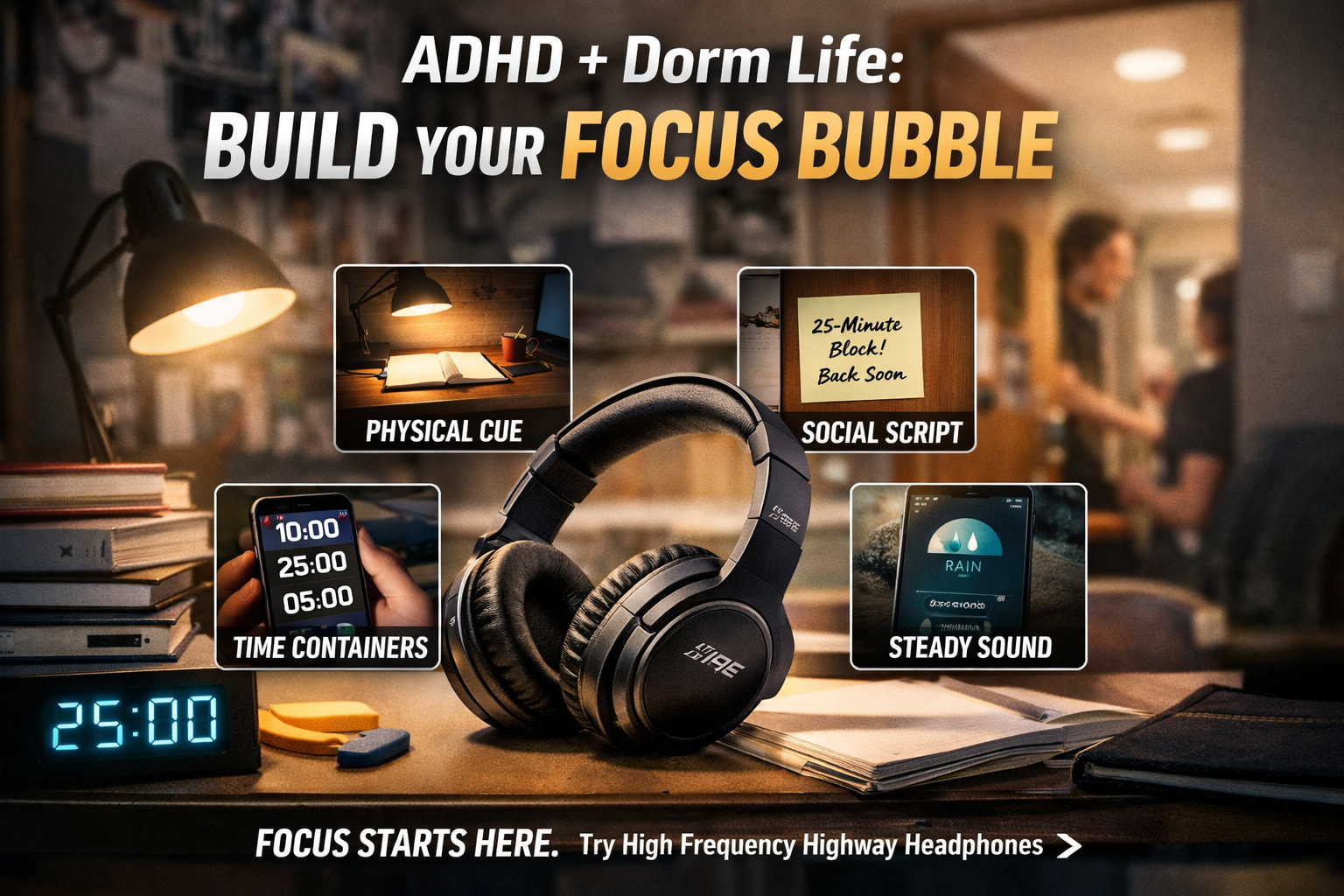
The fix is not more willpower. The fix is building a focus bubble: a simple system that makes your study environment feel more stable, even when your dorm is not.
The real problem is variability
A lot of students say, “I can study with noise.”
Sometimes that is true. But steady noise and random noise are not the same thing.
Steady sound fades into the background. Random sound keeps demanding a response.
That is why dorms are hard on ADHD. The environment keeps changing, so your attention keeps getting dragged with it.
Your goal is not silence. Your goal is consistency.
The Focus Bubble Framework
You do not need a perfect room. You need a few reliable signals your brain can trust.
1) Create a physical boundary
Make one part of your space mean study mode.
It does not have to be dramatic. It just has to be consistent.
Use the same desk corner. Turn on the same lamp. Put your hood up. Sit in the same chair. Open only the materials you need for that block.
The point is not aesthetics. The point is cueing your brain: this is where focus happens.
Small signals work when they repeat.
2) Create a social boundary
Most roommate friction comes from ambiguity, not malice.
Do not say, “Can you be quiet?” That is vague and easy to resist.
Use a short script with a clear endpoint:
“I’m doing a 25-minute block. I’ll be free right after.”
That works better because it sounds reasonable. It gives people a timeframe. It lowers the chance that they take your request personally.
You are not asking for perfect silence all night. You are protecting one block.
3) Create a time boundary
ADHD brains usually do better with edges than with open-ended plans.
“Study for three hours” is heavy.
“Start for ten minutes” is workable.
Use simple containers:
-
10 minutes to start
-
25 minutes to work
-
5 minutes to reset
That structure matters because it reduces decision fatigue. You are not constantly asking, How long am I doing this? Am I done yet? Should I switch tasks?
The timer answers those questions for you.
4) Create a sound boundary
This is the engine of the focus bubble.
Sound is the fastest way to change your environment without leaving the room.
Pick one steady sound:
-
rain
-
ocean
-
pink noise
-
low ambient audio
Then keep it on for the full block.
No switching tracks. No hunting for the perfect playlist. No jumping between sounds every six minutes.
The rule is simple: steady beats interesting.
Your brain does not need more input. It needs fewer surprises.
Why headphones beat willpower in a dorm
Headphones are not just an audio device. They are a boundary.
They do three useful jobs at once:
-
cut down unpredictable noise
-
give your brain one consistent stream of input
-
signal to other people that you are in a work block
That last part matters more than most students realize. Good headphones reduce interruptions before they start.
If you want your focus bubble to hold, the sound layer has to feel stable and immersive. That is where High Frequency Highway headphones fit. They help block competing noise and give your brain one lane to stay in.
Start here:
Try High Frequency Highway
Build a backup plan with zero shame
Some days the dorm will still be a bad environment for focus.
That is not failure. That is data.
Instead of judging yourself, switch locations fast.
Good backup options:
-
a quiet library corner
-
an empty classroom
-
a café with steady ambient noise
The goal is not to prove you can focus anywhere. The goal is to know what works and repeat it.
Dorms are not built for attention.
So stop waiting for the room to become ideal.
Build your own bubble:
-
a physical cue
-
a simple roommate script
-
a short timer
-
one steady sound
Then let the system carry more of the load.
Because with ADHD, focus gets easier when the environment stops changing every minute.
Never forget this: Try High Frequency Highway
Share:
ADHD in College: How to Start Studying When Your Brain Refuses to Start
The All-Nighter Trap: Why ADHD Focus Gets Worse — and What to Do Instead