
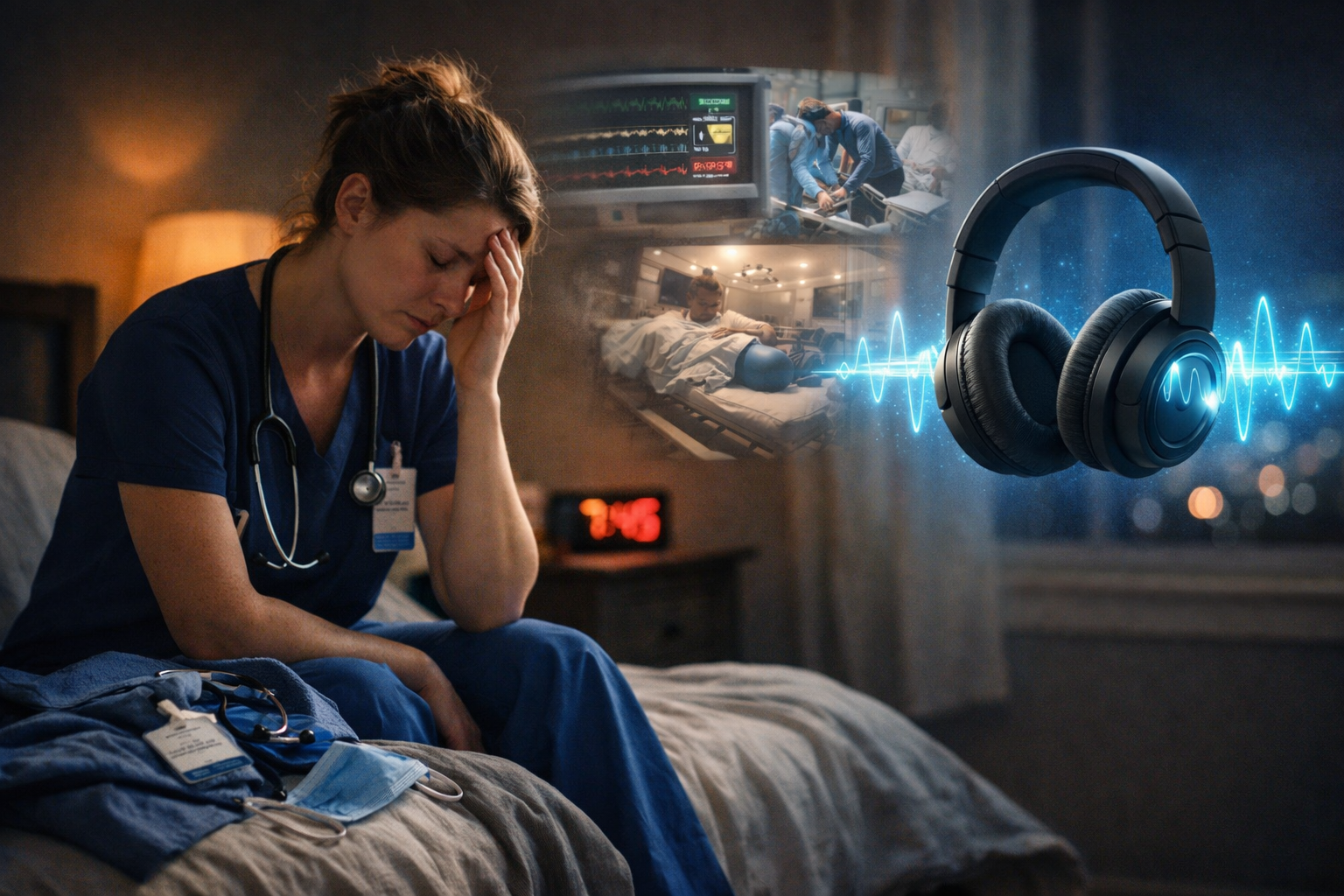
Nurses face extreme stress every shift. Discover how targeted sound frequencies may help support nervous system recovery, relaxation, and better rest after work.
After a 12-hour shift, a nurse finally walks through the front door.
Her body is home. Her brain is not.
She is replaying the patient who crashed. The family conversation she cannot shake. The med she triple-checked because the margin for error felt microscopic. She is exhausted, but still alert. Wired, but drained. She wants sleep, but her body is acting like the shift is still happening.
So she scrolls. Or pours a glass of wine. Or lies in bed waiting to feel tired enough to drop.
And then it happens again the next day.
If you work in healthcare, this pattern probably feels familiar. Nursing demands vigilance, speed, emotional control, and constant responsiveness. Over time, that state does not always shut off when the shift ends. It lingers in the body, in the thoughts, and in the way rest stops feeling restorative.
That is part of why burnout in nursing runs so deep. The American Nurses Association notes that burnout is common in nursing, with a 2020 survey showing nearly two-thirds of nurses reporting burnout, and common symptoms include trouble sleeping, body tension, and emotional exhaustion. Spring Health also reports that 57% of employees say work-related stress negatively impacts them, which helps frame just how widespread stress-related strain has become across the workforce.
The real question is not only how to survive the shift.
It is how to teach your nervous system that the shift is over.
Why nurses struggle to switch off
Nurses are trained to notice what other people miss.
You monitor changes fast. You hold information under pressure. You stay alert when everyone around you is overwhelmed, grieving, or in pain. That kind of sustained vigilance is part of the job. The problem is that your body does not always get a clean off-switch afterward.
What many nurses call “I can’t turn my brain off” often looks a lot like prolonged nervous system activation. You may be physically tired but mentally scanning. You may be safe at home but still feel like you need to stay ready. You may want rest but feel restless instead.
That makes sense.
Nurse burnout is tied to chronic workplace stress, long hours, physically and emotionally demanding conditions, changing schedules, and the moral weight of patient care. ANA also points out that burnout and compassion fatigue are not signs of weakness. They are responses to working conditions that ask a lot from people for a long time.
This is why so many healthcare workers search for things like “how to calm down after a stressful shift” or “natural anxiety relief for nurses.”
They do not need another lecture about self-care.
They need something that actually helps their body come down.
Why the usual fixes do not really solve it
Most post-shift coping strategies make sense in the moment.
Scrolling helps you numb out. TV gives your brain something else to focus on. A drink can feel like a fast way to soften the edges. Sleep aids may knock you out temporarily.
The issue is not that these are irrational.
The issue is that many of them do not address the underlying state your nervous system is in.
They help distract, sedate, or delay. They do not always help regulate.
That is an important distinction.
If your brain is still running in high-alert mode, what helps most is not more stimulation or pure escape. It is a reliable transition. A signal. A repeatable cue that tells your system: you are no longer in the hospital, no one is coding, nothing is urgently required from you right now.
That is where sound can become useful.
What frequency therapy is, in plain English
Frequency-based audio is often discussed in the same breath as binaural beats, brainwave support, and sound-assisted relaxation.
Here is the simple version.
Different kinds of audio stimulation may help nudge the brain toward different states. Some are used to support relaxed alertness. Some are used to support deeper unwinding. Some are designed for pre-sleep use. The science is still developing, and results vary by protocol, duration, and the individual listener, but research suggests these audio approaches may have potential for anxiety regulation, sleep support, and state change when used consistently. At the same time, the evidence is not definitive, so it is best framed as support, not treatment.
That matters, especially for nurses.
Because when you finish a shift, you are not usually looking for a huge wellness routine. You are looking for a fast, low-effort way to shift gears.
That is exactly why frequency-based audio can fit so well into post-shift recovery. It does not ask you to journal for 40 minutes or become a different person. It gives you an environment your brain can respond to while you sit, breathe, drive home, shower, or lie down.
A simple way to think about the frequencies
For post-shift recovery, it helps to think less about technical jargon and more about function.
Alpha-range sessions are often used for relaxed alertness. This is the bridge state. Not work mode. Not sleep. Just calmer, steadier, more present. That makes them useful right after a shift when your body is still carrying momentum.
Theta-range sessions are associated with deeper relaxation and emotional unwinding. This is often the point where people stop feeling sharp-edged and start feeling like they can actually exhale.
Gamma-range sessions are sometimes used when you feel fried but still need clarity. Not activated. Clear. There is a difference.
Delta-range sessions are commonly associated with deep rest and sleep support, which is especially relevant for shift workers whose sleep timing is rarely ideal.
The exact response is personal. No frequency works like magic. But the bigger idea is sound: use the right kind of audio for the state you are trying to move toward.
Why High Frequency Highway makes sense for healthcare workers
What makes a tool useful for nurses is not whether it sounds good in theory.
It is whether you will actually use it when you are tired, overloaded, and done.
That is the appeal of High Frequency Highway.
It turns recovery into something practical. Put on the headphones. Choose the session that fits what your body needs. Let the audio create a transition instead of expecting yourself to force one.
That matters because most healthcare workers do not need more advice. They need lower friction.
A tool like this works best when it becomes part of the handoff between work and home:
You leave the unit.
You get to your car.
You stop carrying the whole day in your chest.
You give your body a cue that it does not have to stay on guard.
That is the shift.
Not perfection. Just a cleaner exit from the nervous system state work put you in.
A post-shift ritual that actually feels realistic
If you want this to work, keep it simple.
Here is a recovery rhythm that fits real life.
1. In the car or before driving home
Use a short alpha-based session for 10 minutes. The goal is not to become sleepy. The goal is to come down from peak alertness and create separation between the shift and the rest of your life.
2. When you get home
Change clothes immediately. Wash your face. Signal to your body that the environment has changed. Then use a 10 to 15 minute theta-style session while sitting quietly, stretching, or lying down. This is where the emotional residue of the day starts to loosen.
3. Before sleep
Use a delta-style session as part of your wind-down, especially if you struggle with racing thoughts after late or emotionally heavy shifts. Keep the room dark. Put your phone out of reach. Let the session become the new cue your body associates with sleep.
4. On especially hard days
Do not wait until bedtime. Use the headphones during a break, in your car, or in the first few minutes after you get home. Earlier regulation often beats late-stage recovery.
The point is not to build a perfect wellness system.
The point is to stop making rest accidental.
This is not indulgence. It is recovery.
Nurses are often exceptional at caring for everyone except themselves.
You know how to monitor deterioration. You know how to intervene early. You know that waiting until a system fully crashes is never the best plan.
That same logic applies to you.
If your body stays activated for hours after every shift, if you feel emotionally flat at home, if sleep feels shallow, if you are carrying work long after work is done, those are signals worth listening to.
You do not need to earn recovery by getting worse first.
You need tools that help you come back to baseline faster, more gently, and more consistently.
That is the promise of a frequency-based recovery ritual.
Not that it solves every stressor in healthcare. It will not.
But it can help create one thing burned-out people desperately need:
a reliable way back to themselves.
FAQ
Can frequency headphones help with nurse burnout?
They are better framed as a support tool, not a cure. Burnout is complex and tied to workload, staffing, sleep, emotional strain, and organizational conditions. What frequency-based audio may do is support relaxation, nervous system downshifting, and better recovery habits.
What is the best way to calm down after a hospital shift?
The best approach is usually one that helps your body transition out of high alert. That can include light movement, reduced stimulation, consistent sleep cues, and audio that supports a calmer state. The key is repetition, not complexity.
What Hz is best for relaxation after a stressful job?
Many people use alpha-style sessions first for relaxed alertness, then theta-style sessions for deeper unwinding. For sleep, delta-style tracks are commonly used. Response varies person to person, so it helps to test what feels best.
Is this a replacement for therapy, medical care, or treatment?
No. If anxiety, insomnia, panic, depression, or burnout symptoms are severe or persistent, professional support matters. Tools like this are best used as part of a broader recovery strategy.
You give everything at work. Your recovery deserves that same level of intention.
Explore High Frequency Highway headphones for post-shift recovery, and build a routine that helps your body understand one simple truth:
you are off the clock now.
Share:
The Complete Guide to Binaural Beats for Professionals (Focus, Calm, Deep Work)
Your Brain on Deadlines: Why Work Anxiety Is Getting Worse and the Sound-Based Reset Professionals Are Using